


Last week was filled with beautiful, sunny 80-degree weather, Southern hospitality, and an under-the-radar entrepreneurial ecosystem converging on the historic campus of College of Charleston for the 13th year of the Dig South Tech Summit. For the uninitiated, Dig South is the premier event growing the South’s innovation economy. The Summit connects leading global brands to the South’s top tech companies, focusing on innovation, business growth, digital marketing, and entertainment.
Over the past 12 years, Dig South has been kindling Charleston’s entrepreneurial spirit. However, unlike other emerging tech hubs, most efforts have been driven by a mighty few rather than a coordinated citywide initiative. The result? Charleston brims with passionate founders, but investors with capital haven’t quite caught up, making initial funding locally as elusive as finding decent pizza outside of New York (sorry, not sorry).
That said, slower progress is still progress. In addition to Stanfield Grey‘s tireless efforts with Dig South, this year marked the inaugural launch of Charleston’s first tech week—a testament to his passion for making Charleston a genuine innovation hub.
Travel Day: A Turbulent Yet Delightful Start
Joe and I flew out of LaGuardia Wednesday afternoon on what was—and I kid you not—the WORST turbulence of my life. The flight was short but anything but sweet... As most people know, I’m not exactly turbulence’s biggest fan.
The silver lining? I had the pleasant surprise of sitting next to John Zebari, Director of Sales at Pop Daddy Snacks. And the icing on the cake? I was clutching a bag of Pop Daddy Dill Pickle pretzels when he sat down—a snack I’d impulsively grabbed at the airport. As the self-proclaimed queen of pretzels (seriously, it’s a problem), meeting the man behind my current addiction was a treat (pun absolutely intended!). If you haven’t tried them yet, they’re worth checking out! (Not a sponsor, just a pretzels enthusiast with opinions.)
After checking into our downtown Charleston hotel, Joe and I decided to explore. My first impression? Pure awe. Walking through streets filled with historical charm and laidback coastal vibes, I immediately understood the appeal. From stunning Antebellum architecture dating back centuries to warm breezes carrying hints of ocean and palm, it’s clear why Charleston is a magnet for both vacationers and transplants.
Day One: Getting to Know the Locals
At first glance, Charleston’s investor community seems sparse, but dig deeper and you’ll find a few hidden gems. We kicked things off with coffee with Eliza Wallace, VP at Meeting Street Capital, an early-stage VC firm focused on tech-enabled solutions in vertical markets built by domain experts across the Southeast.
Similar to other emerging tech hubs, Charleston takes a pragmatic approach to investing. Eliza and her team prioritize founder-market-fit (FMF) and strong founder-GP alignment. At Meeting Street Capital, founder equity preservation is key, with smaller round sizes dominating their portfolio strategy. Their recent areas of interest? Non-profit tech, govtech, and back-office finance solutions.
Next up, we met Herbert L. Drayton III, Managing Partner at HI Mark Capital. If you don’t know Herbert, you’re seriously missing out! He embodies everything we value at Daring Ventures—authenticity, transparency, earned insights over clout, and a giver-first mentality. As the first Black-majority-owned fund in South Carolina, HI Mark Capital started as a traditional VC model before pivoting to a venture studio approach, licensing technology from MITER Corporation (a non-profit operating federally funded R&D centers across defense, healthcare, cybersecurity, and more). If you’re scratching that entrepreneurial itch, Herbert might be your perfect match.
We ended the evening at an Investor-VIP Shindig inside a beautifully preserved room in Randolph Hall on the historic, 250-year-old College of Charleston campus. As we mingled, the tight-knit nature of Charleston’s tech ecosystem became evident. Just like in other emerging hubs, we met several former NYC folks who’d traded big city buzz for community-driven entrepreneurship. Unlike Tulsa, the close community feeling was at times challenging to break in. Locals trusted locals and getting them to warm up to outsiders took a little coaxing.
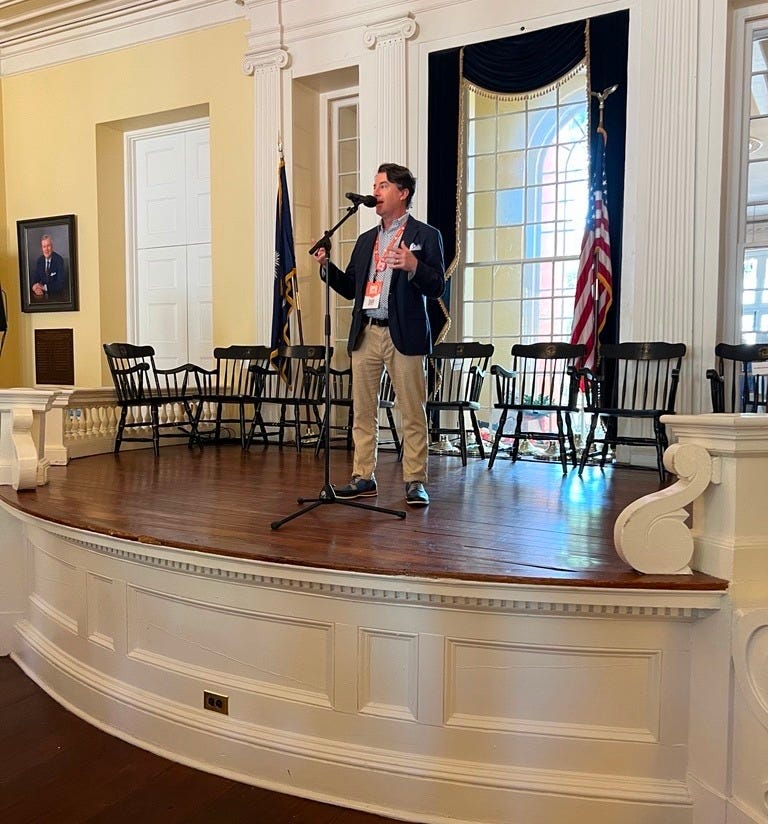
The community was a smaller scale and strongly leaned towards a more old-school networking approach—physical business cards remained the primary form of currency. Throughout the evening, I met founders with profitable businesses less than two years old, like Topline (a professional intelligence platform bridging talent and opportunity). I also discovered a surprising number of people harboring hidden musical talents, including Stanfield Grey and Thomas Heath.
Day Two: Lights, Camera, Action!
Friday kicked off in full force with presentations, panels, fireside chats, and a wild pitch competition. Joe and I both participated—Joe as a judge for the Wild Pitch Competition and myself as a panelist discussing the state of funding in the U.S. Huge shoutout to my fellow panelists and moderator: Kristina Chappell (11 Tribe Ventures), Bill Drohan (Charleston Angel Partners), and Amy Jordan (formerly at CNN Sports).
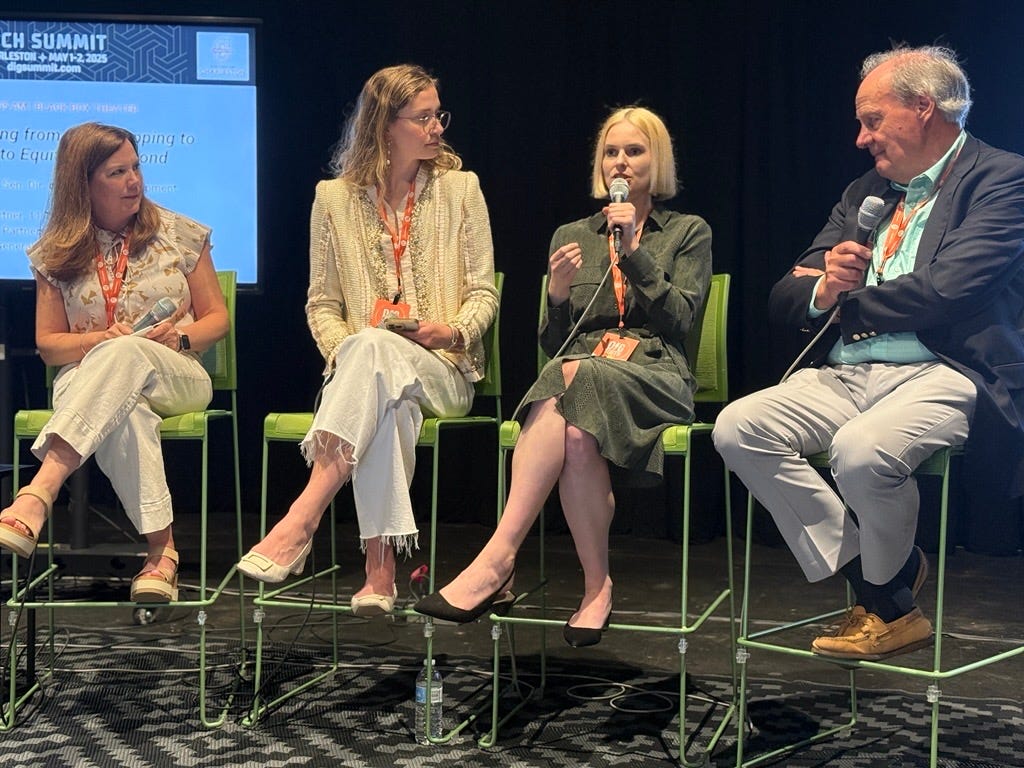
What I learned about Charleston’s funding landscape: good initial efforts, but much more coordination and outside investor engagement is needed. South Carolina currently has a handful of government initiatives alongside angel groups like South Carolina Competes, Charleston Angel Partners, Venture South, and the South Carolina Research Authority. However, the consistent founder feedback Joe and I heard demonstrated a critical gap in true pre-seed funding for pre-revenue businesses.
This creates the classic chicken-and-egg problem: great founders with potential home-run ideas but insufficient capital to unlock opportunities. On the flip side, this presents a golden opportunity for pre-seed firms concentrated in NYC, SF, and LA to look to Charleston for their next deals—especially for startups building in data mining, supply chain, and biotech/health tech innovation (thanks for the insights, Thomas Heath!).
The summit wrapped with the Wild Pitch Finale where three startups—Thrive Data, Reel Analytics, and Nuream—competed to win a chance to pitch for $1M in Silicon Valley plus a $5,000 sponsorship package. After a close battle, Thrive Data emerged victorious.
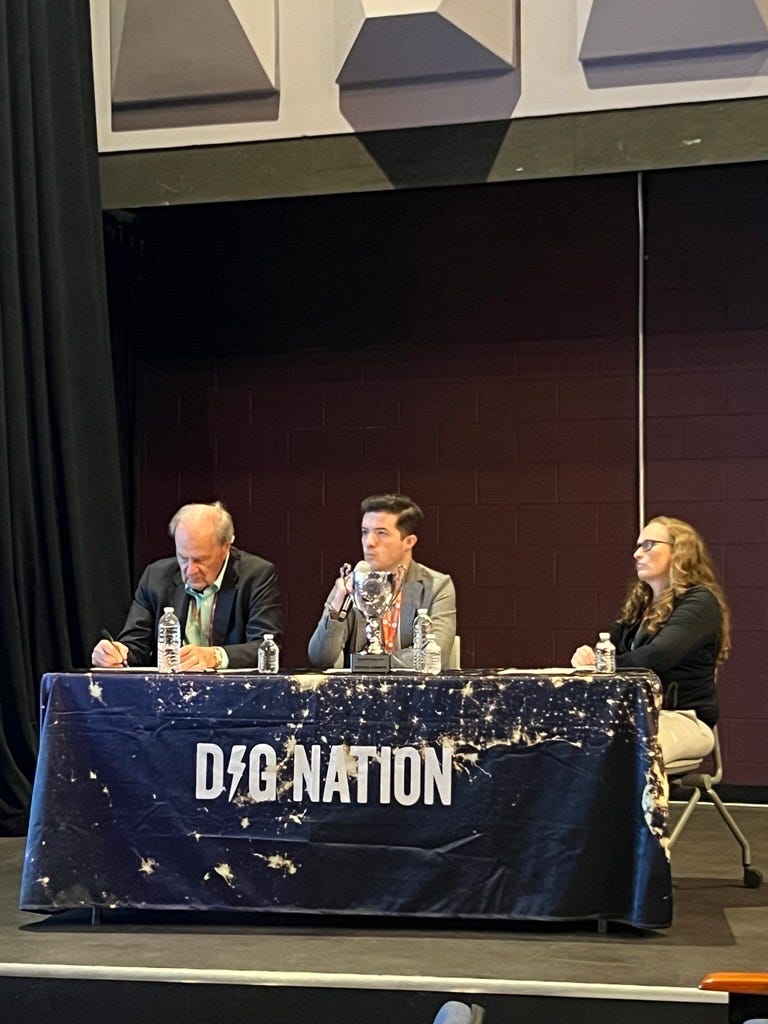
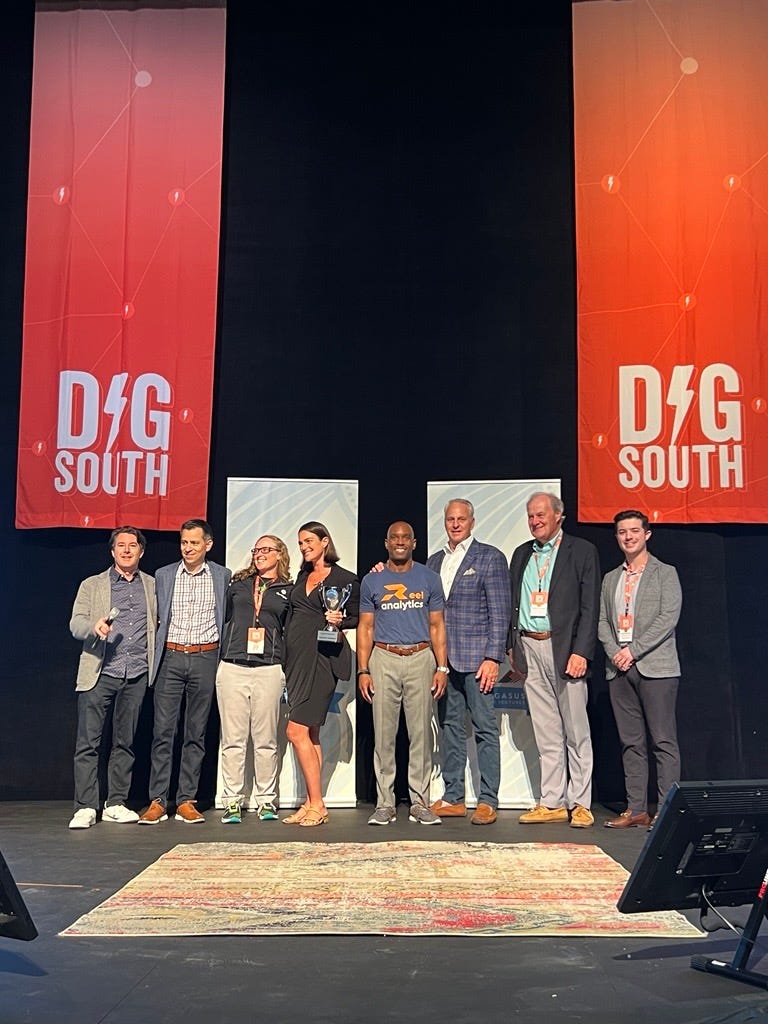
Wild Pitch Competition Finale
Final Thoughts
Charleston has genuine potential as an entrepreneurial hub, but needs stronger connectivity between public and private organizations, more VC dollars flowing in, and enhanced collaboration with nearby tech centers like Charlotte, Raleigh, Atlanta, Nashville, and Birmingham.
My key takeaways:
Charleston boasts a small, tight-knit community that’s entrepreneur-heavy but investor-light
The ecosystem is local friendly, cautious to visitors
Lack of connectivity to regional technology hubs, hampering funding and growth
Southern founders remain wary about VC money due to bad experiences with raising funding too early from investors offering bad terms
The pre-seed funding gap represents a ripe opportunity for VC firms outside South Carolina
There’s deep pride and community spirit throughout Charleston and South Carolina
As I left Charleston, one thing was clear—this charming coastal city has all the ingredients to become a regional innovation hub. It just needs a few more catalysts to ignite the transformation and citywide collaboration.
P.S. If you want a fun read and Charleston themed, I’d highly recommend, Among the Bros: A Fraternity Crime Story by Max Marshall. It’s a wild (and true) story of a fraternity at the College of Charleston back in the mid-2010s.